Nature
-
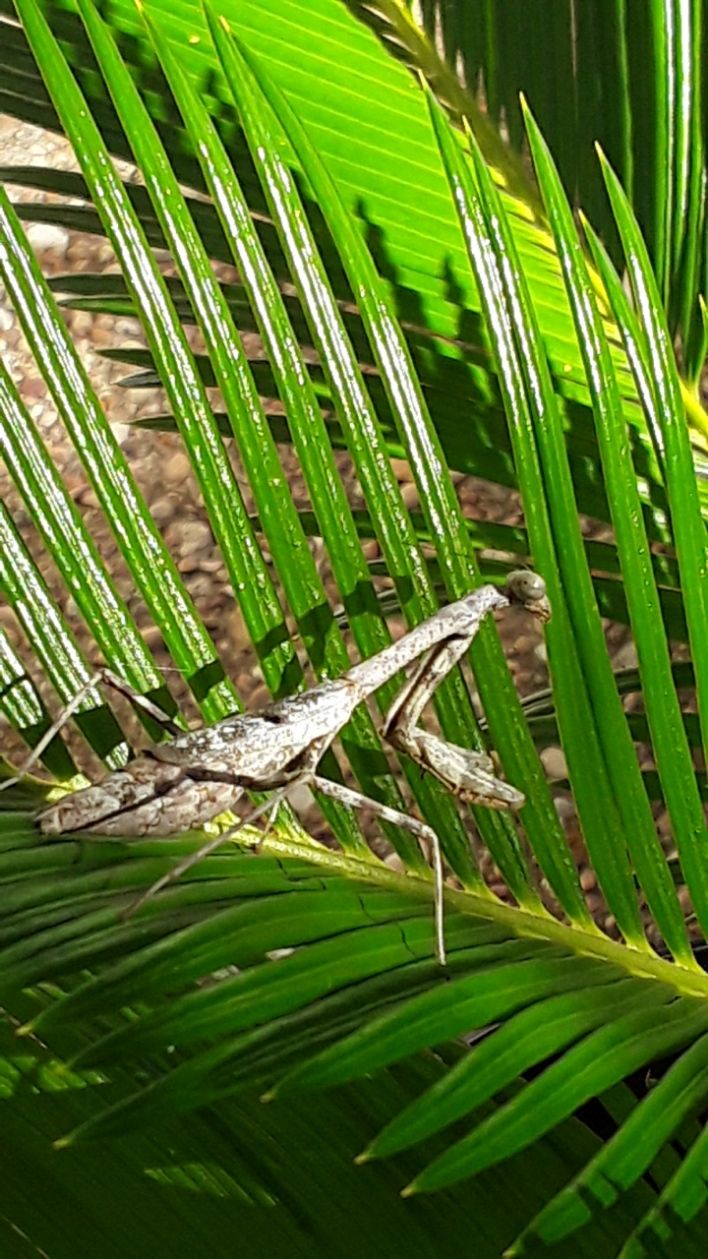
I salvaged the mammoth sunflowers worth keeping after the stalk fell over from the weight of it. I counted 11 blooms at the top and it was laying down on the ground this morning.
-
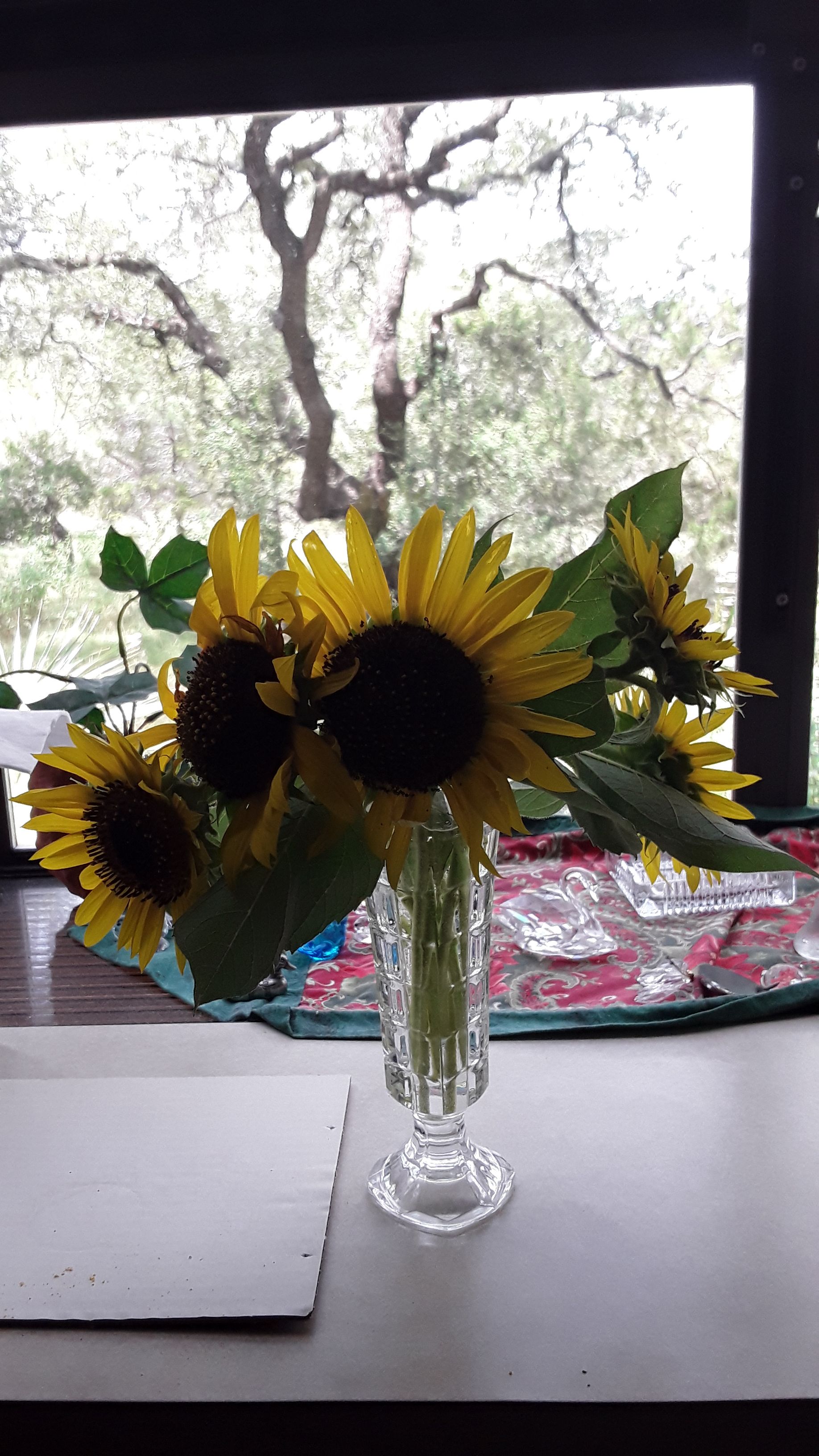
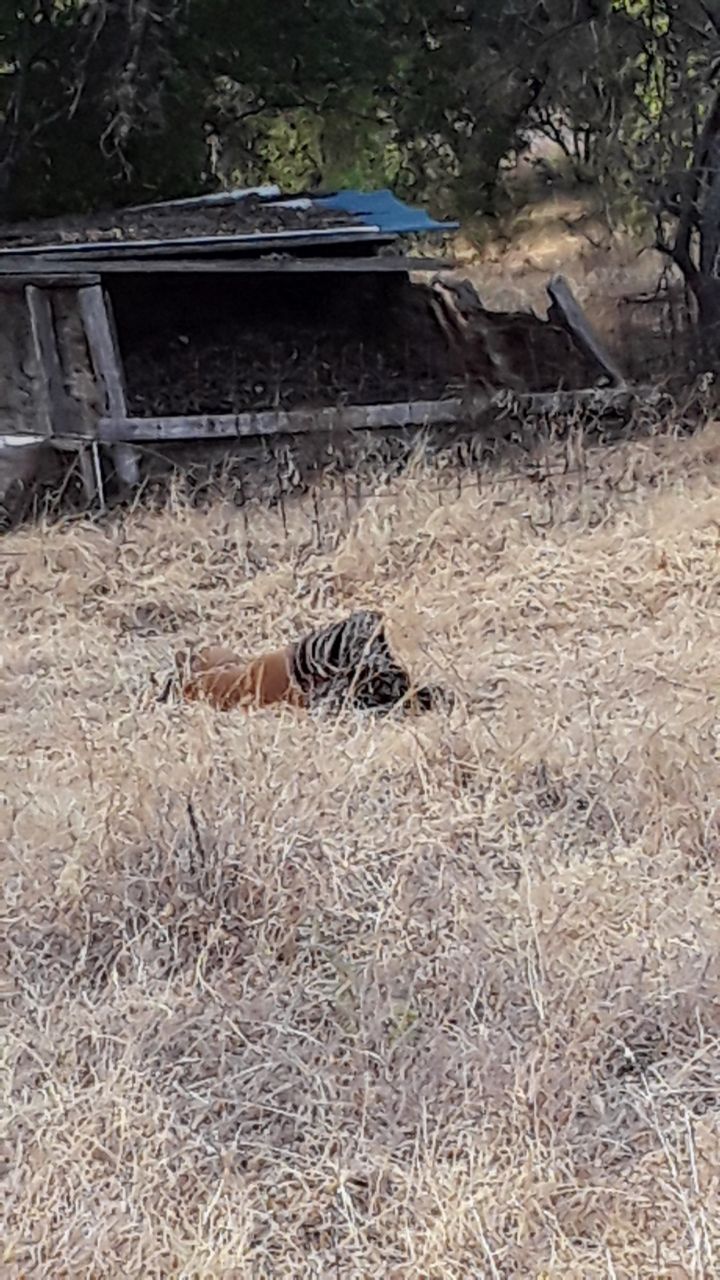
Back in 2023 I awoke to find the backyard filled with turkey vultures and after getting them to scatter I found this half of a buck underneath them.
 Didn't get any closer than this.
-
Huh. Wonder what took it down.
-
@approxinfinity A human probably, sadly. It wouldn't have been that exact of a cut by a coyote and especially a pack of them. I have heard shots off in the distance every year around the start of November. Wardens were called years ago but there was nothing they could do. We watched someone stop in their truck and cut off the tail of a huge rattlesnake that Mike killed one year and word spread that he had tossed it into a patch of cedars behind our property. They literally cut off the rattles and hooped and hollered. Rednecks from the sleazy part of the lake.
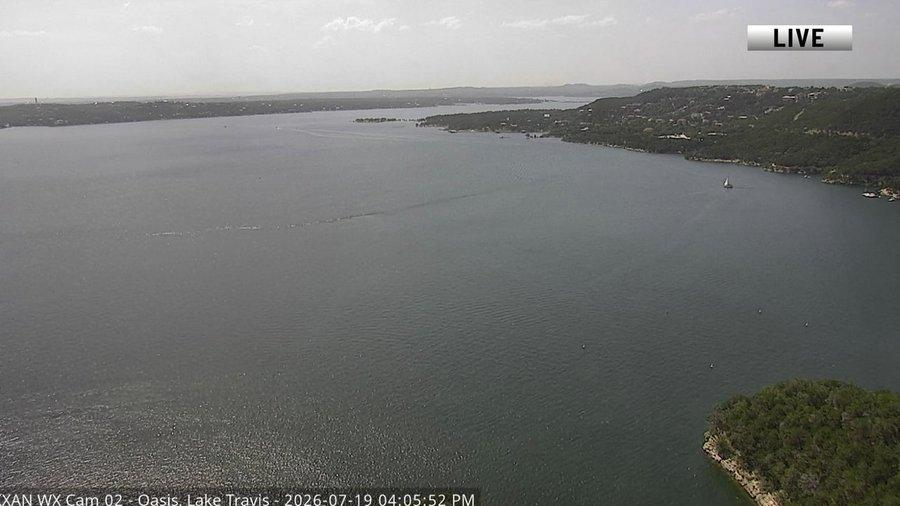
Speaking of the lake, Lake Travis is 106% full. There used to be islands in the middle of this part of the lake. It's at a restaurant overlooking the main basin down from Mansfield Dam. Gates are still open at 4 damns created to be pass throughs and even still down at Tom Miller Dam in Austin. I saw a time lapse from 2019 to present day where Lake Medina went from 8% full to 100% full after the rains. Now with the system in the Gulf of MEXICO, it has the potential to come our way and dump massive amounts of more rain, so

#RCJH GO KU
-
@RockChalkinTexas-0 is your property high enough ground to avoid flooding?
-
@approxinfinity The lake is full at 681' and is at 684.86' and still rising. Our house sits the highest of anyone at 713 feet above MSL. My oldest neighbor could get water in her basement as she is along the lakefront at 691' if the gulf system moves over us.
-
Dang. Glad youre safe.
-
ALERT TO @nuleafjhawk
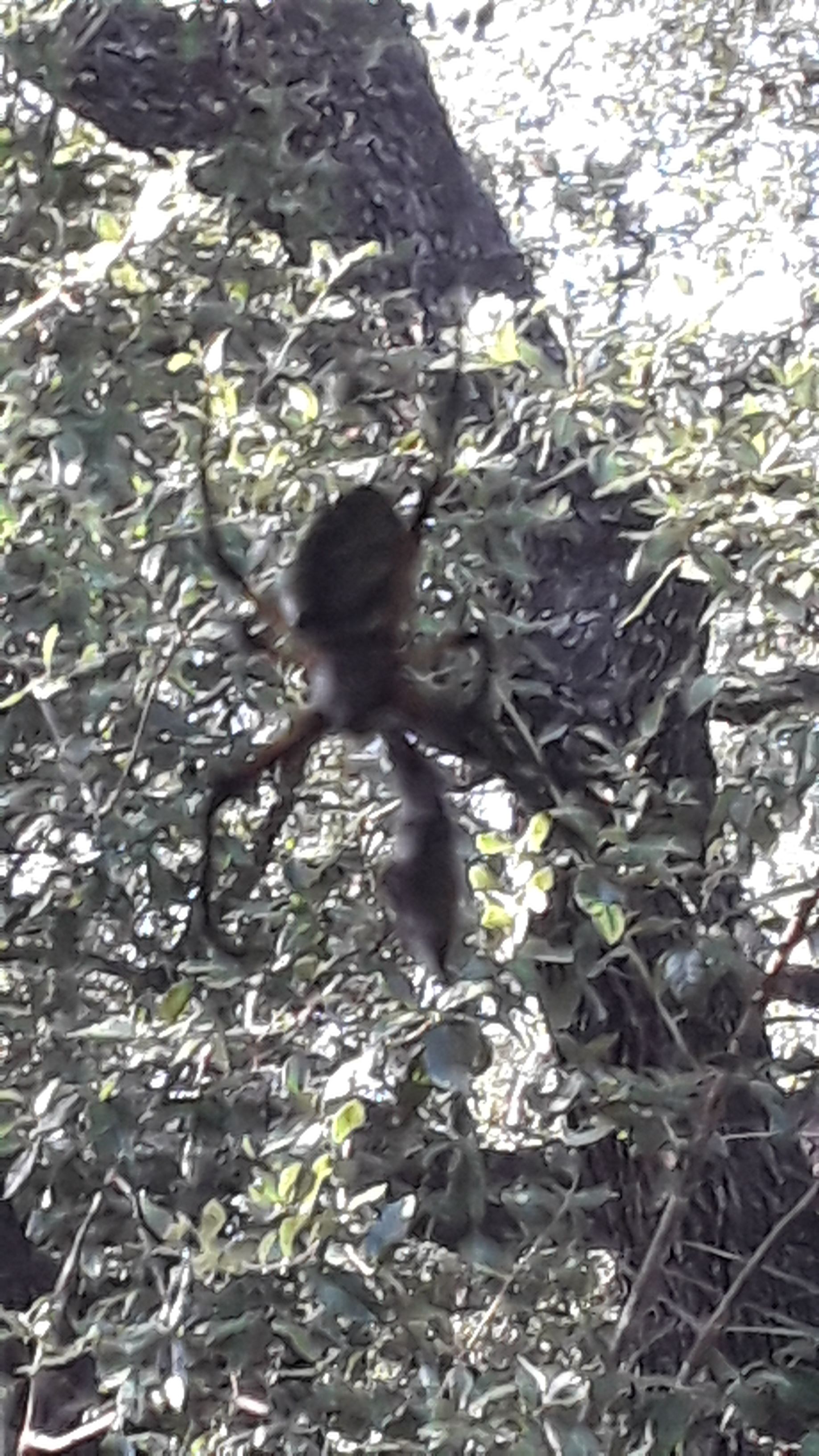
The spider this morning had a big breakfast! It's almost gone now. Saw him with something different yesterday. He's a good companion to have around.
-
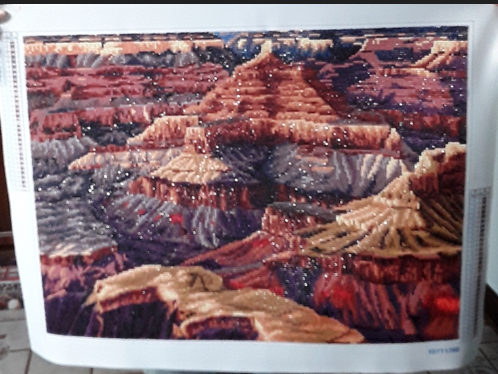
The girls also do these Diamond Dot art. They were turned on to them when we had our last Solar Eclipse party and a friend's sister-in-law from Seattle who came for the eclipse sent this to the girls as a thank you. Some are frame worthy. This is one of the bigger ones. Most are 9x12. The kit comes with the stylus, glue pads, dots, and a guide. Each one is individually placed on the backing to create the image. It's very time consuming and I bought them each a new magnifyer so they could see the numbers and symbols directing them what to apply. Lots of quiet time spent together by them, each doing one side and meeting in the middle!
-
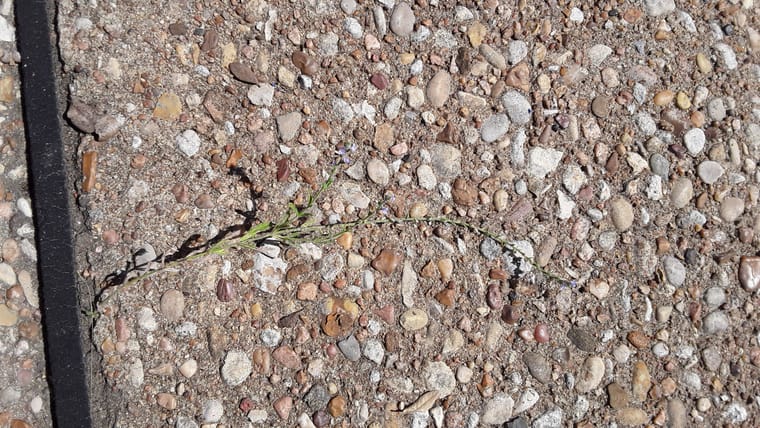
This plant shows the extreme temperatures we've had. It sucked the life out of it. Even so, it is still somehow surviving. It's a very skinny False foxglove (Penstemon cobaea) blooms in April and May across the rolling plains and Blackland Prairie south to the Gulf of Mexico. Also known as prairie penstemon, this showy flower grows best in sandy or rocky open hillsides, limestone outcrops, and loamy soils.
@approxinfinity @nuleafjhawk We found a second banana spider on the back window of the solarium. We have twins!!!!

-
-
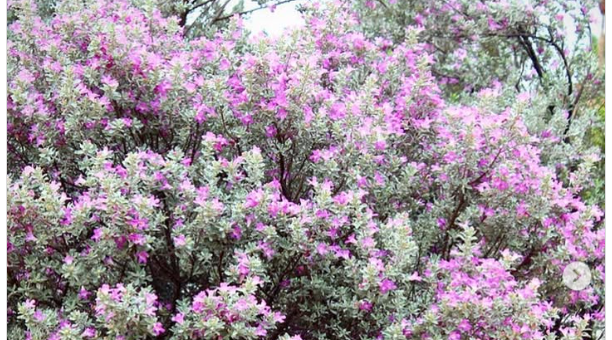
I was out cleaning and filling up the bird baths and deer bucket earlier this morning and saw my purple sages in the back lots in full bloom after the rains. But I am not walking through hip high grasss to get a picture. An evergreen native to West Texas, South Texas, and the Edwards Plateau, Texas sage has small silvery-gray-to-green leaves and a loose form, unless it’s trimmed into a hedge. With this mild appearance, it usually blends into the surrounding landscape. But from time to time, the plant erupts with vibrant purple flowers, a color riot that many believe heralds rain. After months of brutal heat and cloudless skies, the blooming of the “barometer bush” can be a joyous occasion. There are no scientific studies on how rainfall affects Leucophyllum frutescens’s blooming patterns, so no one can say for sure. Several experts say the plant’s blooming is triggered by high humidity or low atmospheric pressure. Though it does occasionally bloom ahead of rainfall—seemingly in anticipation of precipitation—more often it flowers after a shower.
They look like this:
-
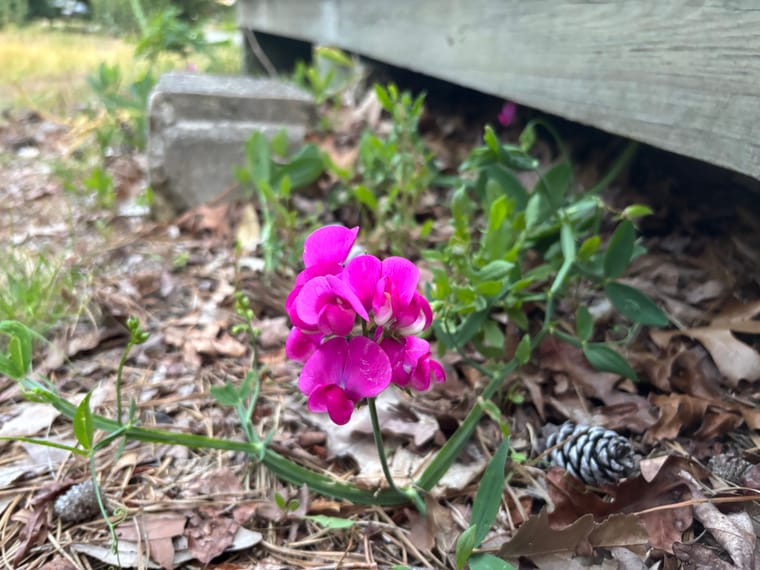
Wild sweetpeas dont look like much but their flowers are gorgeous
-
All I can say is, this was such a great time in our lives to have seen Frank become BIFM! Have a great day! This should bring a smile or two to your faces. Beauty in motion!
https://x.com/RoyalsPlsWin/status/2080826169486676169/video/1 -
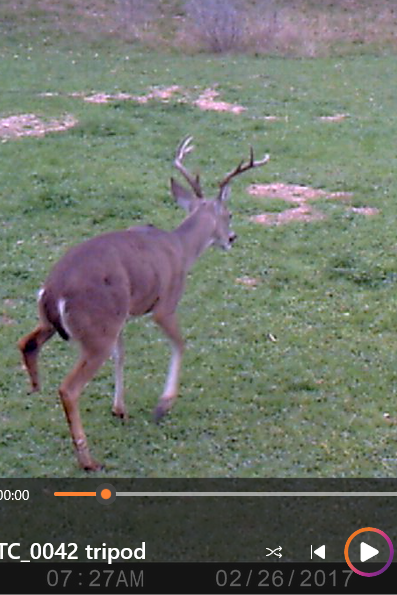
I wanted to post a video of a deer we had that Mike called Tripod for obvious reasons. Mike found the lower bone to his missing leg out back one day when he was searching for an arrow in the grass. He lived for a couple of more years and then we never saw him again. (I found Mike's videos he took of wildlife, his stealth cam pictures and the girls and I have been reliving some of our highlights from the past 30 years). Video is too big and I don't know how to make it smaller, so will go with this freeze frame.
-
@RockChalkinTexas-0 what a badass.
-
@rockchalkintexas-0 one way would be to post video to youtube and then link to it. Not ideal, of course.
-
@approxinfinity I tried to email to you and it said it was too big there too. I didn't want anyone thinking I made it up.
-
@rockchalkintexas-0 we dont need the people that think that anyway

-
DINOSAURS PROBABLY DINED UPON A VARIETY OF FRUITS AND SEEDSs.
Found this fascinating. This is from The KU Alumni monthly newsletter.LAWRENCE — Dinosaurs likely munched on a lot more fruit than previously imagined.
Recent research appearing in the journal Science overturns a long-held idea that flowering plants didn’t evolve large fruits and seeds until after the mass extinction of dinosaurs about 66 million years ago, when Earth was smacked by a giant asteroid.
Co-author James Saulsbury, postdoctoral researcher in the Biodiversity Institute and Natural History Museum at the University of Kansas, said the study changes how scientists think about plant-animal interactions and their role in plant evolution.
“This paper focuses on a fossil forest in New Mexico and the preserved fruits, seeds and other reproductive structures of the plants that lived there,” he said. “These fossils change how we understand the way flowering plants became modern in terms of their reproductive ecology.”
According to Saulsbury, paleobotanists generally had believed that flowering plants, which first appeared roughly 136 million years ago, only evolved modern reproductive strategies after the extinction event that wiped out the dinosaurs at the close of the Cretaceous.
“For much of their early history, they were relatively small, weedy plants that did not dominate forest canopies,” Saulsbury said. “Although they gradually diversified and occupied more ecological niches, it was thought their seeds and dispersal structures remained small and were primarily dispersed by wind or without fleshy fruit.”
The KU researcher said these early seeds and small fruits would have been similar in size to anything from dust particles to poppy seeds at their biggest. Modern flowering plants, by contrast, use a much wider variety of dispersal strategies. Many produce large, fleshy fruits that entice animals to spread their seeds. Think apples, pears, avocados, olives, and coconuts.
“The prevailing view has been that this more diverse reproductive ecology emerged only after the end-Cretaceous extinction,” Saulsbury said. “Our study suggests that transition began much earlier. The largest fruits in our fossil flora are about the size of a grape. That may not sound especially large today, but it is remarkably large for flowering plants of that period.”
The findings were drawn from an important field site near Truth or Consequences, New Mexico, where the study’s authors, including Saulsbury, performed fieldwork over many years.
“The New Mexico fossil site is exceptional,” he said. “My co-authors have referred to it as a ‘botanical Pompeii’ because of its remarkable preservation. The site contains a layer of volcanic ash preserved as rock, known as tuff, that stretches for more than a kilometer. The deposits formed at essentially the same time, preserving many plants where they lived and died. It provides a snapshot of a forest from about 74 million years ago and even preserves aspects of its spatial arrangement.”
The site is also special because of the diversity and size of its fossil fruits and seeds, according to Saulsbury.
“However, we don’t believe these findings are simply the result of preservation bias,” he said. “It appears to represent a genuinely unusual forest.”
According to Saulsbury, fruit size matters because size is associated with so many aspects of forest ecology.
“Large fruits tend to occur in moist environments with densely packed forests,” he said. “Our findings indicate that modern-looking forest structure and reproductive ecology were developing earlier than previously believed. The diversification of flowering plant reproductive strategies did not have to wait until after the end-of-Cretaceous extinction.”
The new research challenges one longstanding idea that large fruits evolved alongside the rapid diversification of mammals only after the asteroid impact eliminated the dinosaurs.
“As mammals expanded into newly available ecological niches, flowering plants were thought to have diversified their seed dispersal strategies in response,” the KU researcher said. “Our findings suggest that story began earlier. If diverse, large fruits already existed in Cretaceous forests, they were likely being dispersed not only by early mammals but also by large dinosaurs and other animals.”
Saulsbury participated in fieldwork, collected fossils and carried out much of the initial classification, measurement and analysis of the fossils.
“We sorted hundreds of fossil seeds into what we call morphotypes,” he said. “These are groupings based on form rather than confirmed species because it is often impossible to determine whether similar-looking fossils represent one species or several.”
Saulsbury's co-authors were lead author Jaemin Lee of the University of California, Berkeley; Dori Contreras of the Perot Museum of Nature and Science; Garland Upchurch of the University of Colorado Museum of Natural History and Cindy Looy of the University of California, Berkeley.