Optimism in music
-
Listened to Jimmy Cliff Follow My Mind 3 times today, @rockchalkintexas-0 . I love the energy and optimism. I havent listened to much reggae this decade! But I have been feeling more optimistic about the future of this planet. I believe in the youth and where they can take us. There is lots of cause for optimism if we look a little further down the road. So this music hits me right at the right time.
-
Music is the thing that really gets me going. I love all kinds of music - ALL kinds. (Except rap. And no, i.am.not.racist.
-
I really like Bob Marley but don't listen to enough reggae by other artists. I will give Jimmy Cliff a try. On a related note, I have been enjoying the music of Paraguayan guitar and harp virtuoso Oscar Benito lately.
-
I can provide names of other Reggae artists that you might want to check out. So many of them have passed these last few years. Toots Hibbert of Toots and the Maytals, Uroy, The Upsetters, and so many more are the classics.
For anyone interested, here is the link to the show by Robert Nesta Marley at Hoch.
https://www.mixcloud.com/dubwisegaragecollection/bob-marley-and-the-wailers-dec-6th-1979-hoch-auditorium-lawrence-kansas-full-show/ -
- Positive Vibration
- Wake Up & Live
- Them Belly Full
- I Shot The Sheriff
- Concrete Jungle
- Runnin Away > Crazy Baldhead
- The Heathen
- Ambush
- War > No More Trouble /
- / One Drop
- Exodus
- No Woman No Cry
- Lively Up Yourself
- Natty Dread
- Is This Love?
- Jammin %
- Get Up Stand Up
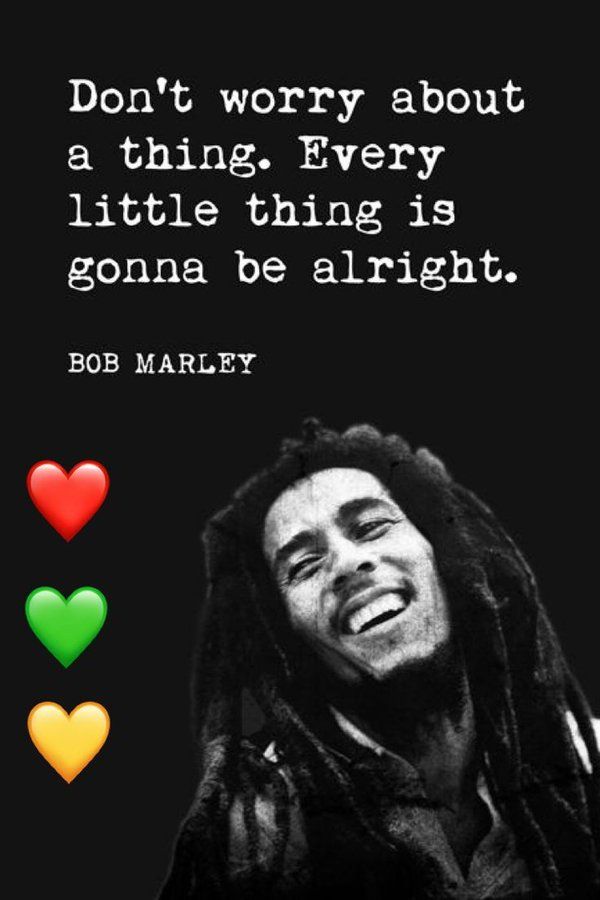
3 Little Birds is my fave but he didn't include it. Johnny Was is another great one. I could go on and on and on.
-
![20251203_093544[1].jpg](/assets/uploads/files/1764776557754-20251203_093544-1.jpg)
-
An artist in LA drew this charcoal portrait and sent it to me along with one of Ali and many others.
![20251203_093639[1].jpg](/assets/uploads/files/1764776623612-20251203_093639-1.jpg)
-
-
Can't let another great Reggae artist passing go unnoticed. Truly an inovative and founding father of technology when it came to drums. He played with so many of the late greats. Sly Dunbar RIP To read more about him see excerpts from Rolling Stone article today.
This is a video of him on the drums in "Guess Who's Coming to Dinner?" by Black Uhuru
https://x.com/i/status/2015849934889582967Sly Dunbar, Reggae and Dancehall’s Rhythm King, Dead at 73
With bassist Robbie Shakespeare, Dunbar recorded and produced countless hit records, and played a crucial role in reggae’s modern evolution.
Dunbar was just 15 when he joined his first band and recorded his initial song. It marked the start of a prolific and deeply influential career, with Dunbar earning worldwide acclaim for his work alongside bassist Robbie Shakespeare (who died in 2021). It’s been estimated that, over the decades, Sly and Robbie played on more than 200,000 recordings, including the original tracks, remixes, and the numerous songs that have sampled their work.As the rhythm section (and production duo) Sly and Robbie, the pair played on reggae classics by Black Uhuru, Jimmy Cliff, and Peter Tosh, developing a reputation that would garner them work with the likes of Bob Dylan, Grace Jones, and the Rolling Stones. Sly and Robbie also released numerous albums of their own, and played a crucial role in pushing reggae into the future with their adoption of electronic instruments and more syncopated rhythms.
Lowell Fillmore Dunbar was born May 10, 1952, in Kingston, Jamaica. Dunbar, in a 2021 interview, credited his sisters with filling his childhood home with Otis Redding, Booker T. and the MGs, and Sly and the Family Stone (it was his love for the latter that led to him being nicknamed “Sly”). But Dunbar was inspired to become a drummer after hearing Lloyd Knibb play with the Skatalites. Before he had a kit of his own, he played on his desk at school, as well as cans. At the age of 13, he successfully convinced his mother to let him abandon school to pursue music.
Dunbar’s first gig was with a band called the Yardbrooms, while his first recording session took place with Lee “Scratch” Perry and his backing band the Upsetters, during which they cut, “Night Doctor.” In 1969, Dunbar played on the album Double Barrel, by Dave and Ansell Collins, with the song’s hit title track going to Number One in the U.K.In 1973, Shakespeare saw Dunbar play at a nightclub and was immediately taken with his prowess. He recommended Dunbar for a studio session, and the pair hit it off. “The first time we played together I think it was magic,” Dunbar said in 2009. “We locked into that groove immediately. I listen to him and he listens to me. We try to keep it simple.”
Soon, Dunbar and Shakespeare were playing with the Revolutionaries, the house band for Jamaica’s Channel One studio, while also touring and recording with Tosh. Additionally, the so-called Riddim Twins formed their own production company, Taxi, and spent the Seventies working with major reggae acts like Gregory Isaacs, Dennis Brown, and Barrington Levy. A big part of their success was their pioneering of the “rockers” rhythm, which allowed them to inject more syncopation and energy into the already popular and omnipresent “one drop” rhythm.
Aside from Shakespeare, Dunbar played on some of the most lauded songs in the genre’s history, including Junior Murvin’s “Police and Thieves” and Bob Marley’s “Punky Reggae Party.”
In 2021, Dunbar explained how the rockers beat was partly inspired by all the funk and disco he and Shakespeare were listening to during the late Seventies, as well as their tour with Tosh (opening for the Rolling Stones) in 1978. During that run, Dunbar said, the pair “discovered our fears, and we had to change and try to get some energy in reggae because the one drop was a bit light playing indoors in a big arena, a big stadium.… When we come back to Jamaica, now, we started experimenting with the open-snare thing with the Black Uhuru, and the snare came alive.”That more energetic sound defined Sly and Robbie’s work with Black Uhuru, with whom they linked in the late Seventies as both rhythm section and producers. With Sly and Robbie’s backing, Black Uhuru released several successful albums, including Red, Guess Who’s Coming to Dinner, and Anthem, which won the inaugural Grammy for Best Reggae Album in 1985.
Black Uhuru’s success also led to greater recognition — and more work — for Sly and Robbie, as both producers and session musicians. They worked on several albums with Jones, including her 1981 genre-smashing classic, Nightclubbing, and played on three Dylan records, including 1983’s Infidels. They also recorded with Mick Jagger, the Stones, Yoko Ono, Jackson Browne, Joe Cocker, Ian Dury, and Carly Simon. Sly and Robbie released several albums of their own, too, including 1987’s seminal Rhythm Killers.
Speaking in 2012, Dunbar summed up his approach to drumming, tying it back to his endless curiosity and desire to always be innovating .“When I see the red light, I go for it,” he said. “I take chances and have a different thing.“I try to be different but I’m not putting down other drummers because I respect all drummers and look up to them a lot,” he added. “But I think for me to come to the marketplace and make a statement I have to find something that people will like and people will enjoy, so I’m always on the searching side of things. I’m still searching, I’m looking, I listen every day for ideas.”
Courtesy of Rolling Stone
-
 i’ll listen Black Uhuru at work tomorrow. Its been a long time.
 -
Wow, I haven’t thought about Black Uhuru since the 80s!
I’ll have to revisit their tunes as well. -
@approxinfinity your wife won't let you listen at home?
-
This is a fun song: Mix Up Mix Up by Bob Marley. It just puts you in a good mood!
https://youtu.be/1TQfpkG6i6Q