Nature
-
Lindley Hall is getting a major renovation. The Tombaugh Observatory sits atop the roof and I hope they will keep that (and maybe update it as well). I used to go there as a kid and it fueled my in interest in space and astronomy.
I entered KU in 1983 with a dream of pursuing Astrophysics but detoured after Calc 1&2 kicked my ass. (My rural Kansas public school education did not prepare me well in Math.)
But, more to the topic: I was not at all surprised when Pluto was re-categorized as a dwarf planet — and not disappointed.
As a kid, I thought its eccentric orbit (it crosses paths with Neptune and is occasionally closer to Sun than Neptune) and irregular elliptical suggested that it was exogenous to our solar system. Astronomers didn't have any good explanations for these irregularities, and I felt it was most easily explained by a scenario where our sun drifted close enough to another star to pull a distant satellite away.
So, even though Pluto doesn't have planetary status, I think it should be recognized as unique gift to our solar system.
Rock Chalk!
-
@bskeet That was my building as a geography major. Enjoyed my time there greatly. Math forced me to abandon my plans to become a cartographer!
-
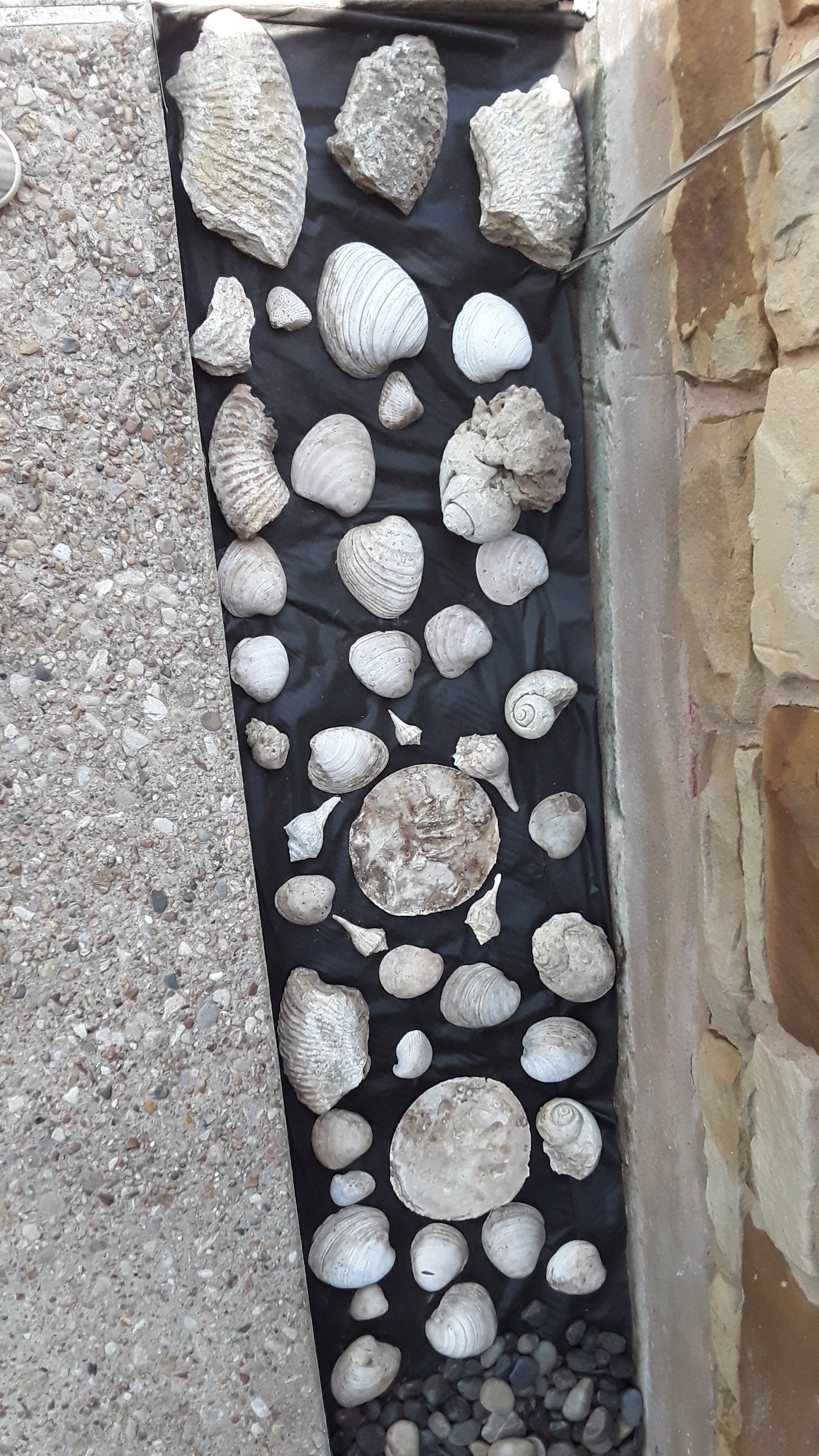
I spent the morning cleaning up my fossils and shells from the coast.
-
@wonderofscience
Curiosity Rover spotted on the surface of Mars by the orbiting MRO spacecraft.
 : NASA/JPL/UoA
https://x.com/wonderofscience/status/2084287182911533426/video/1 -
@RockChalkinTexas-0 It's the Gulf of America! Be proud that it is.
-
@bskeet I watched a Nova called Pluto and Beyond and gained a new respect for the planet because even though it is now a dwarf planet, it actually grew to be King of the Kuiper Belt.
JOHN SPENCER: When we launched the New Horizon spacecraft back in 2006, we knew we wanted to fly to an object beyond Pluto, but we didn’t have a particular object that we knew we could reach with our spacecraft. So we started doing deep searches of the sky beyond Pluto.
MARC BUIE: One is, you have two circular objects that are close to each other, but they are orbiting each other, or it could be just some lumpy potato-shaped thing. And then the third is what we call a “contact binary,” two balls stuck together. And we think it could happen for Kuiper Belt objects. We don’t know, we’ve never seen one of these things before.NARRATOR: But when New Horizons finally brings Ultima Thule into focus, the results could be profound. This elusive object could revolutionize our understanding of how the planets in our solar system formed.
ALAN STERN: Ten, nine, eight,...NARRATOR: January 1st, 2019, 12:33 a.m.:
ALAN STERN: …one. Go New Horizons!
NARRATOR: As the world rings in the new year, the New Horizons team celebrates the moment of the spacecraft’s closest approach to Ultima Thule. But it will be hours before anyone knows if the flyby is successful.
JOEL PARKER: Ultima Thule is so far away that it takes six hours to send a signal from the spacecraft to Earth.
ALICE BOWMAN: We have a healthy spacecraft. We’ve just accomplished the most distant flyby of our solar system.CROWD CHEERING
NARRATOR: That night, the first close up image of this distant object comes in.
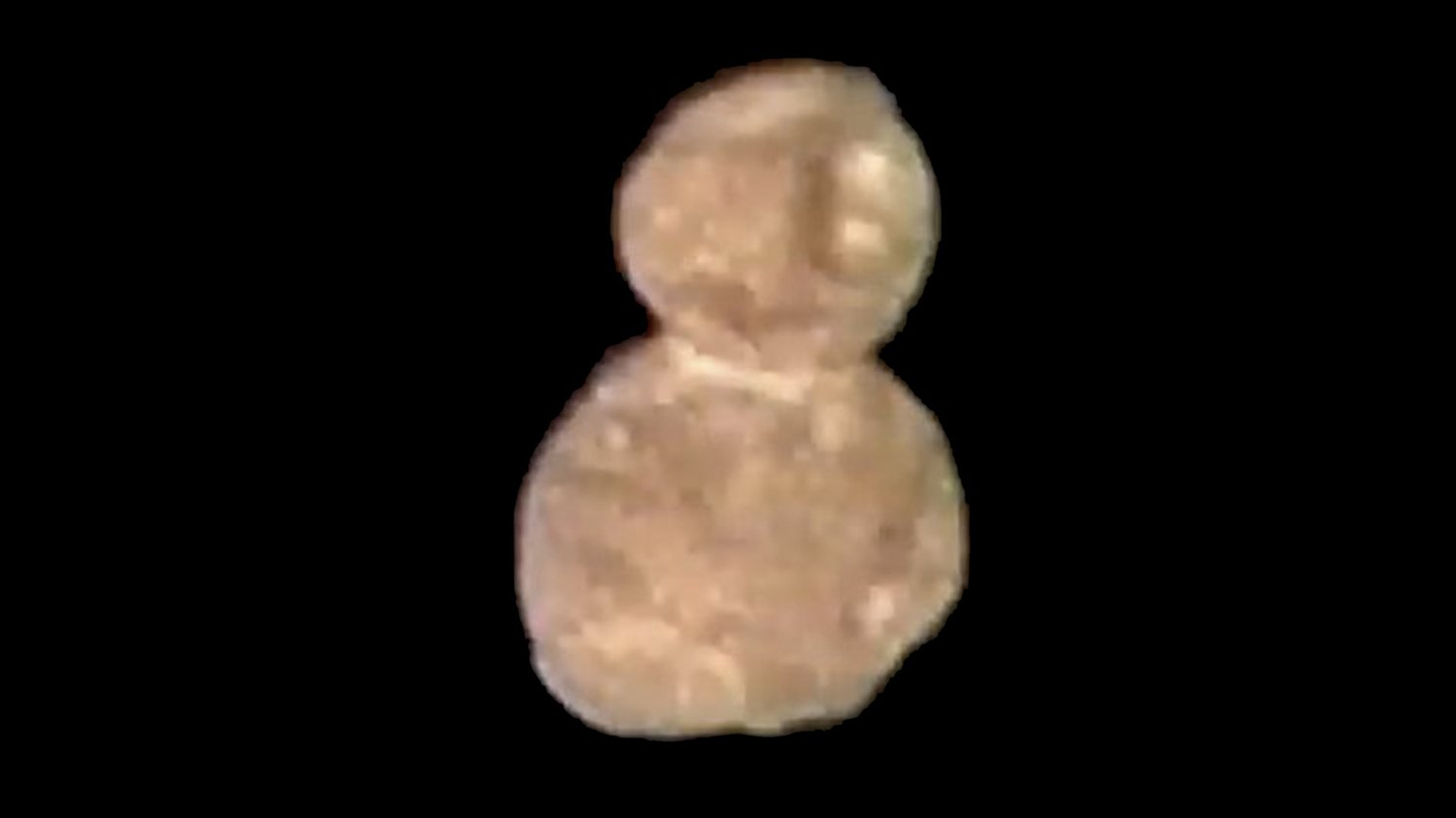
JOHN SPENCER: Well, what we saw today blows out of the water anything we’ve seen. The first image was two or three pixels across. Yesterday, you could see, kind of, two lobes. And today’s image, we see it for what it really is: basically, two spheres stuck together, like this really is two things that formed as two different objects.
THIS IS WHAT THEY SAW!
-
This was Mike's first attempt at making a #Jayhawk. It's head moves up and down. Sits right there by my swing when watching birds and hummingbirds.

-
Went to Switzerland a month ago. Here's a couple.

-

-

-