Nature
-
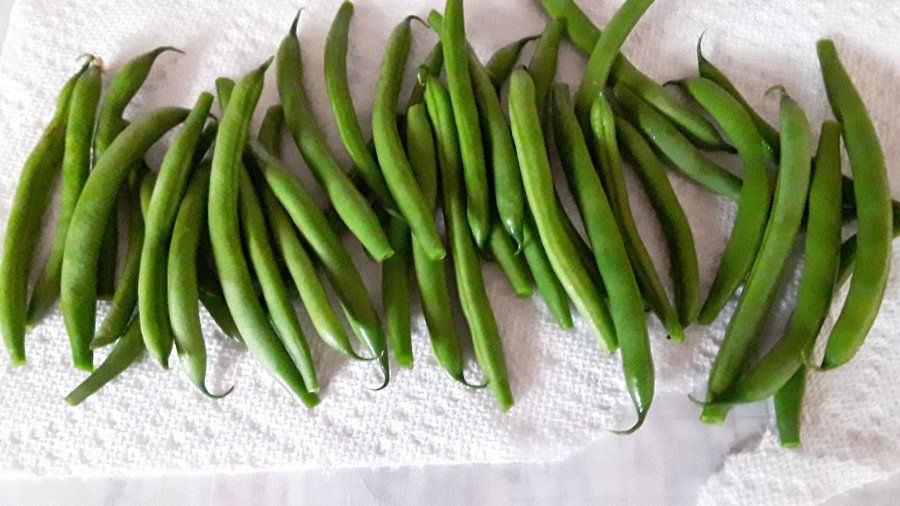
I am getting ready to savor the great taste of home grown green beans that I picked yesterday off of the 8 plants that have survived this very wet spring. There is nothing better than eating something you grew and nurtured. They, along with sweet corn we are having, are my most favorite thing to eat and brings back memories of picking my grandmother's in her garden on their farm in South Dakota. I believe my love for gardening stems from the summers I spent at their farm when we lived in Bloomington, MN and our parents would drop off my 4 older brothers and me. They had a well and you would drop the bucket down and pull it up and drink from a ladle. No indoor plumbing. No AC. My four older brothers locked me in the barn loft one day and on another escapade they left me atop a hay bale when the cows came into the pasture. They were brutal but, don't worry, I got them back when they were in junior high and high school. I could earn a couple dollars not telling on them. Worked many times. LOL
I can almost taste them now.
-
@RockChalkinTexas-0 love fresh g beans w/some new taters and some ham!
-
Today's photo is of a crocus. We have lots of these scattered throughout the properties. They seem so delicate. I did not know that they cultivate saffron from these plants!!. Mine are mostly white but have seen a couple of purpleish ones.
Crocus (/ˈkroʊkəs/; plural: crocuses or croci) is a genus of seasonal flowering plants in the family Iridaceae (iris family) comprising about 100 species of perennials growing from corms.
They are low growing plants, whose flower stems remain underground, that bear relatively large white, yellow, orange or purple flowers and then become dormant after flowering. Many are cultivated for their flowers, appearing in autumn, winter, or spring. The flowers close at night and in overcast weather conditions.
The crocus has been known throughout recorded history, mainly as the source of saffron. Saffron is obtained from the dried stigma of Crocus sativus, an autumn-blooming species. It is valued as a spice and dyestuff, and is one of the most expensive spices in the world. Iran is the center of saffron production.
Crocuses are native to woodland, scrub, and meadows from sea level to alpine tundra from the Mediterranean, through North Africa, central and southern Europe, the islands of the Aegean, the Middle East and across Central Asia to Xinjiang in western China. Crocuses may be propagated from seed or from daughter cormels formed on the corm, that eventually produce mature plants. They arrived in Europe from Turkey in the 16th century and became valued as an ornamental flowering plant.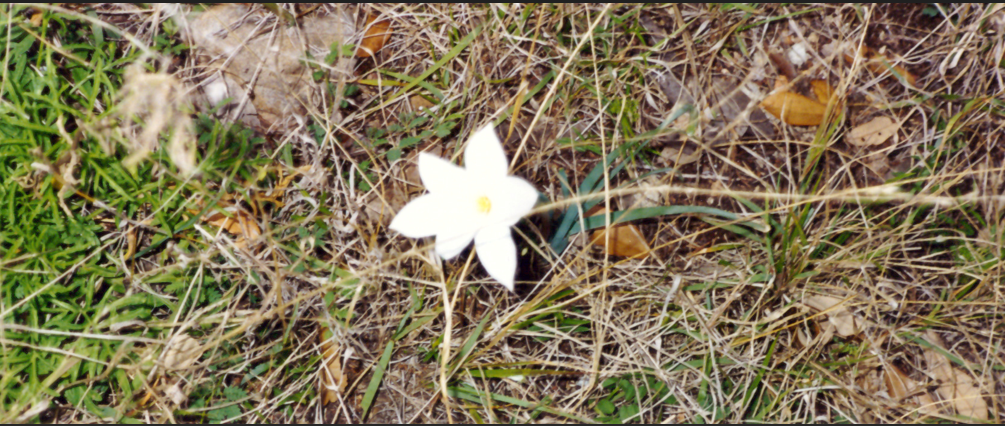
-
@RockChalkinTexas-0 this one was really cool! I knew nothing about crocus.
-
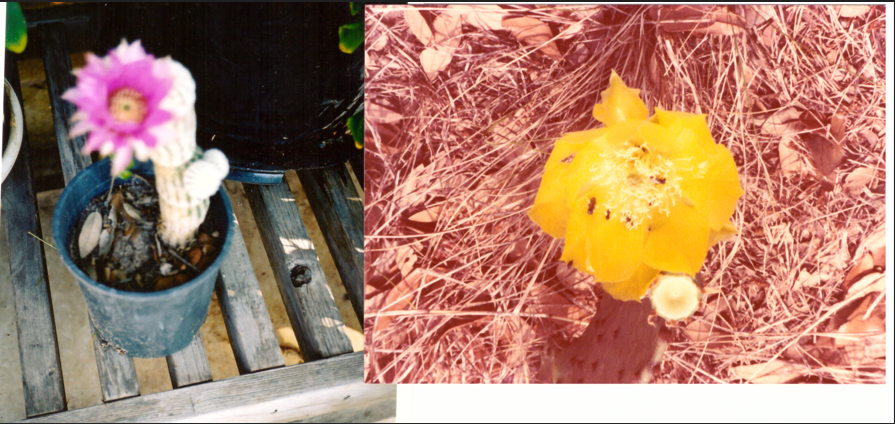
Today's photo is of a couple of blooming cacti. We have a lot of prcikly pear, pencil, barrel, and "old man" (pictured here) with pink bloom. There is an "old lady cactus" too. We have had workers in the past that asked if they could cultivate the edible fruit (red blooms) called "tunas" and the pads to eat. YUCK. Hannah once fell into a pencil cactus patch and for a week I pulled the little stingers out of her. If you even get near them, they shoot their stingers at you.
-
Today's photo is of a Trumpet Creeper that I photographed in the parking lot of The Bluebonnet Cafe, which has been there forever. I have one growing on one of my lots out back. However, I am not about to go walking out there because I would be eaten up with chiggers. Because of all our rain this spring, the grass back there is almost waste high. I have a hard enough time working in the garden and mowing and filling up the hummingbird feeders without getting eaten up.
Trumpet Creeper may be the most famous hummingbird attractor. Not only are its big, showy red flowers a treat to look at, but hummingbirds will swarm them as fall migration begins. This vine can bloom as early as June, but usually peaks in August and early September. Make sure you give it space to grow, otherwise it can take over and grow on top of other nearby plants.
Trumpet Creeper is good for adding some vertical structure to your yard, since it can grow up high on trees, walls, roofs, or almost anything else, leaving plenty of space on the ground for other plants.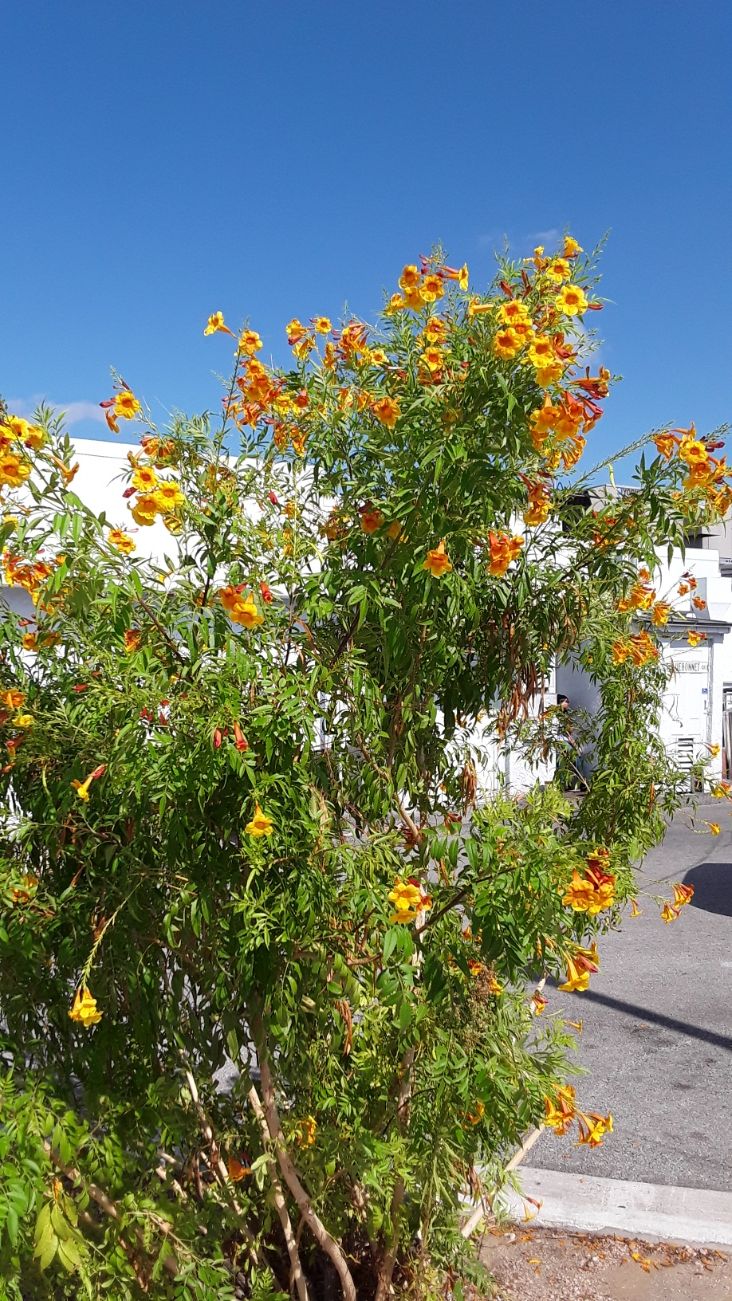
-
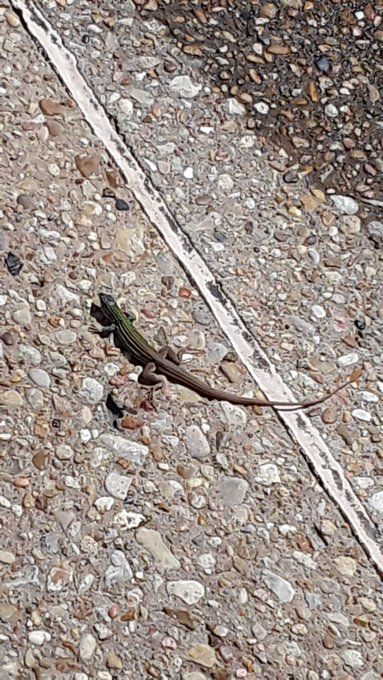
Today's photo shows a Laredo Striped Whiptail checking me out when I was cleaning out the mower and weed eater. There are a number of these that are out during the day. The Laredo striped whiptail mostly relies on insects as their primary food source. They have a lot of energy and move quickly, which lets them hide quickly when they feel threatened. The striped whiptail has a dark green or dark brown body with seven yellow or white stripes. Also, they like to live in places with sandy soil and few plants.
-
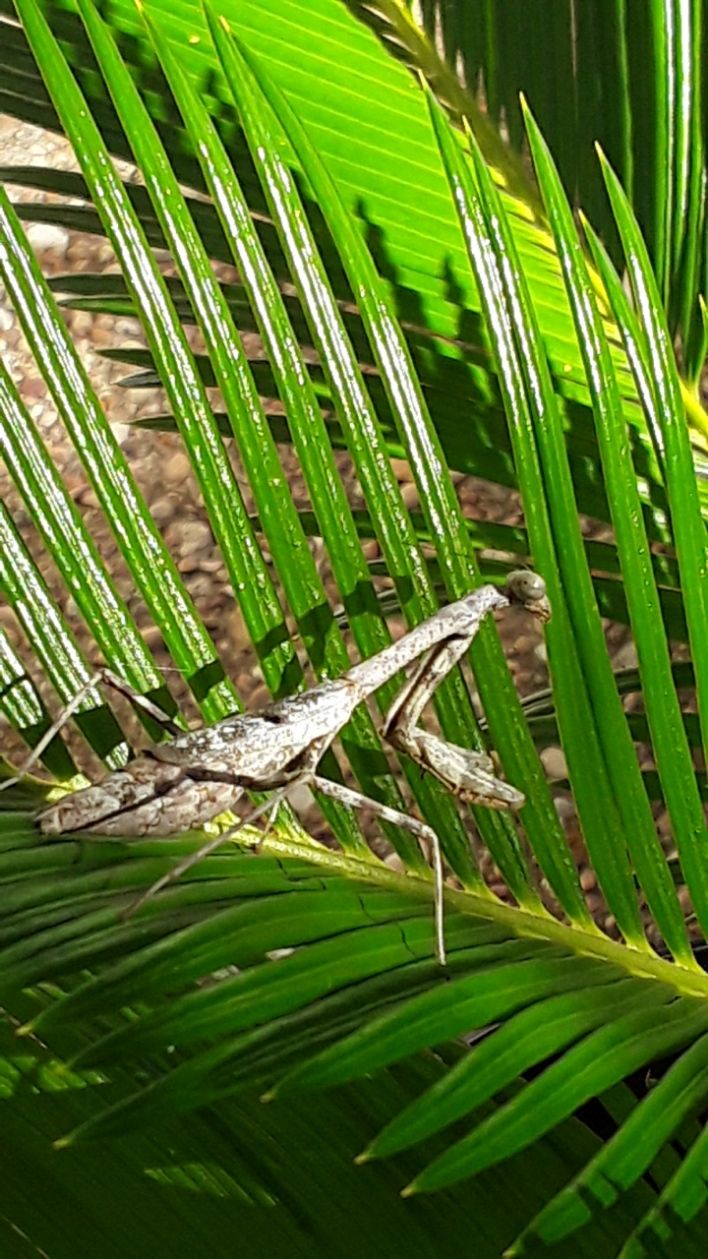
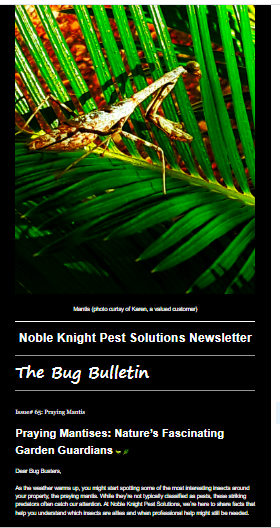
My photo of the praying mantis was featured in my bug guy's blog today! Pretty cool. He's having a photo contest too at his 4th of July party in Fredericksburg. We are planning to go.
-

Heres the current Magic Puzzle called Crystal Caves we are working on. I am a big fan of the inner borders of these puzzles as finding border pieces is my favorite part of puzzle making and this is a challenging version of that task
-
Today's photo shows not only the sentiment shown on the cup but also the delphiniums picked from the garden earlier this spring, before a storm was coming. I would rather they re-seed in the garden. Where does the name delphinium come from?
With a little imagination, you can see that the buds of the flower look like dolphins . Hence the name delphinium, the Latin word for dolphin. If you already have delphinium in your garden, you can use the seeds from it. When your delphinium has finished flowering, wait until the seed capsules are completely dry. If you hold them upside down, the seeds will fall out. Store them in a paper bag in a dry, cool place and sow them next spring.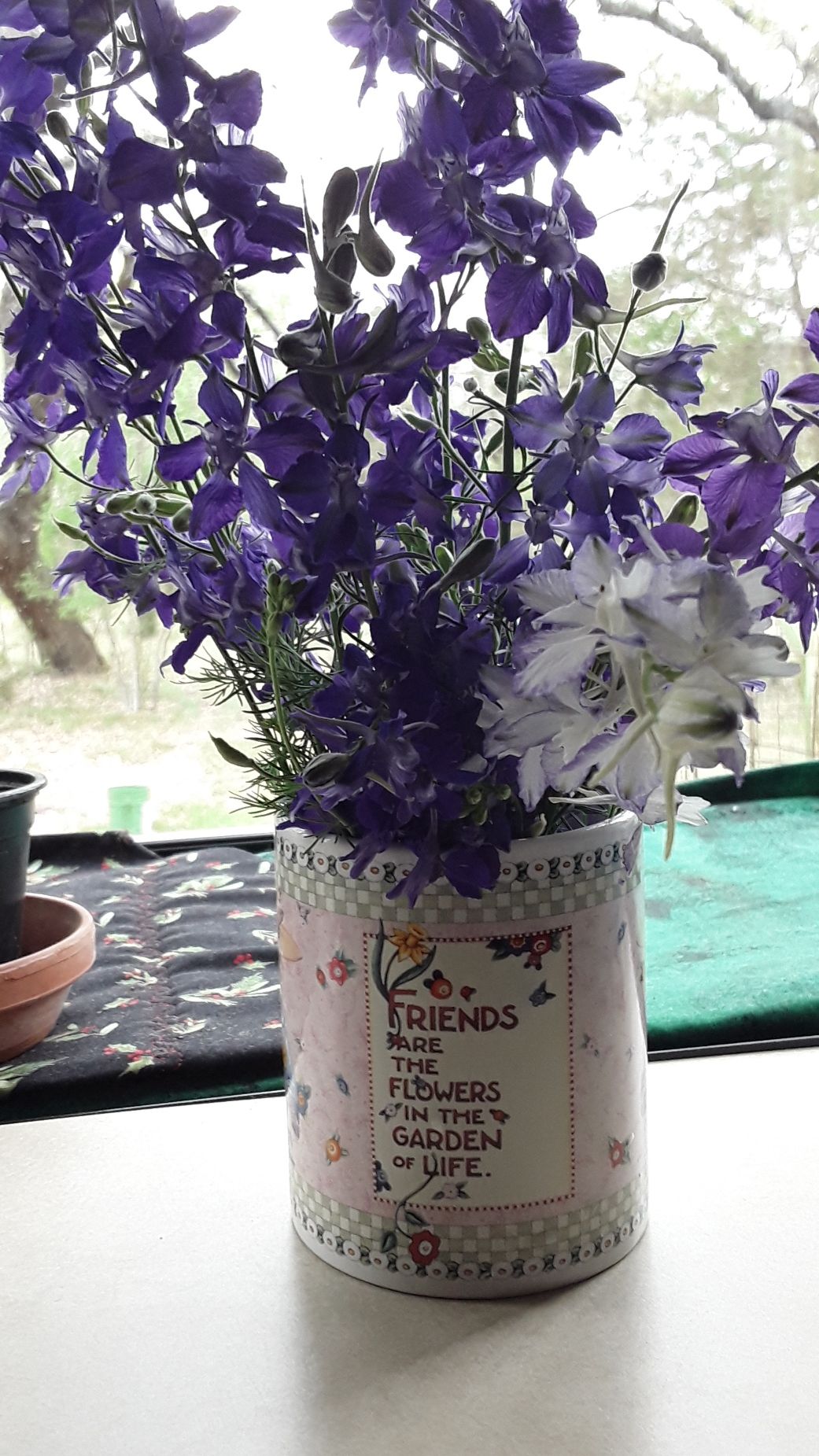
-
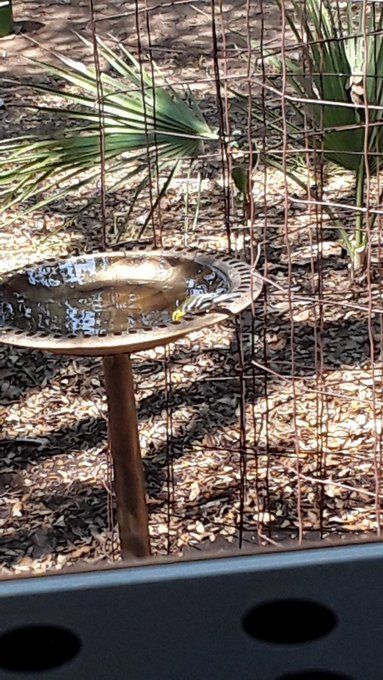
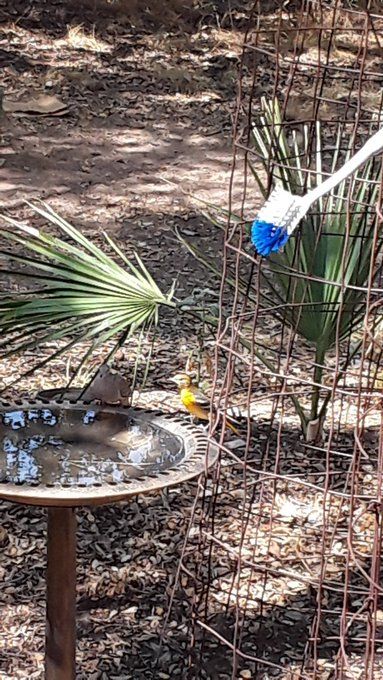
Today's photo is of a Golden-Cheeked Warbler that visisted my bird bath. As you can see from their description below, they are Endangered, and my properties are the perfect habitat for them and is a big point in my protesting my real estate tax increases, year after year, especially since other properties around mine have been stripped bare of their critical habitat. I was so lucky to get these pictures, you don't know. Below is from Texas Parks and Wildlife site.
Texas Status: Endangered
U.S. Status: Endangered, Listed 5/04/1990
Description
Adult Golden-cheeked warblers reach a length of 4.5 inches.
Life History
Golden-cheeked warblers nest only in central Texas mixed Ashe-juniper and oak woodlands in ravines and canyons. Warblers eat insects and spiders found on the leaves and bark of oaks and other trees. They use long strips of cedar bark and spider webs to build their nests. They come to Texas in March to nest and raise their young, and leave in July to spend the winter in Mexico and Central America. Females lay 3-4 eggs during nesting season. Of the nearly 360 bird species that breed in Texas, the Golden-cheeked Warbler is the only one that nests exclusively in Texas.
Habitat
Woodlands with tall Ashe juniper (colloquially "cedar"), oaks, and other hardwood trees provide habitat for the golden-cheeked warbler.
Distribution
Distribution of the Golden-cheeked Warbler (Setophaga chrysoparia)In Texas, golden-cheeked warblers are found in the Edwards Plateau and locally north to Palo Pinto County.
Other
Golden-cheeked warblers are endangered because many tall juniper and oak woodlands have been cleared to build houses, roads, and stores. Some habitat was cleared to grow crops or grass for livestock. Other habitat areas were flooded when large lakes were built.
-
-
I have had this photo from Apollo as my background on every computer, laptop and phone ever since I could remember. I have always been fascinated by space exploration and could happily watch NASA TV (before it became a subscription channel) and learn something new every time. I remember the moon landing...and to this day I get updates on when the International Space Station is flying over and I will get up and go outside to watch it. Mike and I would sit outside at night during meteor showers and just be in awe. We have had solar eclipse parties and camp outs for people who had never really seen the sky. We watch the phases of the moon by glancing up at night from my balcony deck and we can see Venus and Jupiter right now low in the western sky. We are learning to use the telescope and can zero in on specific areas of the moon. I was a Carl Sagan fan long before it was cool! He awakened something in me that gave me my overall view and sense of where we are all on this "pale blue dot".

-
I also follow the sun. FYI:

-
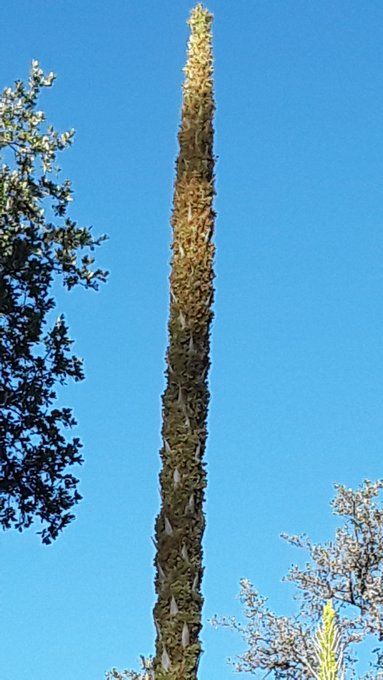
Today's photo is of a sotol that Mike brought back from the deer lease he went to down in very south Texas, in the desert. The three that he transplanted bloomed last year for the very first time. It was something to see.
Sotol
Dasylirion texanum
Agavaceae FamilyThis spiny evergreen plant was an important food staple for the native peoples in the Lower Pecos Canyonlands and adjacent areas of the western and southern Edwards Plateau. Native peoples also made use several other sotol species that can be found to the west across much of the Chihuahuan Desert in northern Mexico and the southern part of the American Southwest. The pulpy central stems or "hearts" of sotol plants were baked and then pounded and formed into chewy patties which could be dried and stored. This carbohydrate food source was probably a mainstay in areas where sotol grew in abundance.
Sotol is a evergreen rosette plant, with long spine-clad leaves that attach in a series of circular tiers around a shortened, central stem. Although sotol is sometimes called a "cactus" or an "agave," it is neither. Some botanists today classify it a member of the Nolinaceae family, like beargrass, while others place sotol in the Agavaceae family (e.g., Powell 1998), along with the true agaves such as lechuguilla. The tough fibers from sotol leaves were used for making mats and twine and its woody flower stalk was valued as a straight, lightweight wood useful for many tasks. Sotol seeds are also edible, and have been recovered from coprolites (preserved human feces) analyzed from dry caves in the Lower Pecos archeological region.
Weaving and basketry. Sotol leaves are an ideal material for weaving mats, trays, burden baskets, tumplines, and general purpose baskets (Andrews and Advasio 1980; McGregor 1992). Preparation of the leaves for weaving is simple. The leaf is either utilized whole, or split into narrow strips. In some cases, the marginal teeth (spines) are removed before the leaf is woven into a mat. In other cases the leaves with the marginal teeth intact are woven into the basket or mat. In a comprehensive study on basketry of the region, McGregor (1992) identified sotol in mat and basket fragments. Often sotol was woven into baskets with other materials, including yucca fibers or strips of yucca leaves, agave fibers, or grass fibers.
Food. The plant's central stem is very fleshy or pulpy, and serves as a storage organ, containing both moisture and carbohydrates. The central stem, often referred to as the “heart,” is edible, but only after it is baked in an earth oven for 36-48 hours. The very long cooking time is needed to break down indigestible long-chain carbohydrates and poisonous compounds, mostly saponins, which are a combination of a sapogenin, a steroid compound, and a sugar, usually glucose. The heat and steam generated by an earth oven, however, breaks down complex carbohydrates, splits the sugars from the steroidal compounds, breaks down the compounds, and leaves the pulpy central stem edible. Usually the cooked, fleshy pulp was pounded into thin patties and sun-dried. If kept dry, baked sotol patties can remain edible for months: chewy, but sweet and nutritious. It tastes like nutty molasses syrup.
Most researchers associate agave use throughout the Chihuahuan and Sonoran Deserts of northern Mexico and the adjacent American Southwest (including west Texas) with earth oven processing. It is, however, increasingly evident that both sotol and yucca were utilized as important food sources in the Edwards Plateau region. For example, San Angelo (or narrow-leaf) yucca [Yucca reverchonii], a plant with an inedible fruit, was identified from deposits at Baker Cave (Brown 1991). Both yucca and stool have been identified in abundance from Hinds Cave (Dering 1999). When baked in an earth oven the central stem of San Angelo and other related yuccas is edible and can be prepared much like sotol.
It is very likely that sotol and yucca were among the main food resources that were routinely cooked at many archeological sites in the western and southern Plateaus and Canyonlands. Over time, this process results in the accumulation of “burned rock middens,” the highly visible, common, and easily identified prehistoric site feature in the region. Archeologists have recovered charred sotol and/or yucca fragments (leaf sections) from burned rock midden sites on the Edwards Plateau, such as the Honey Creek site. Unfortunately, it is almost impossible for paleobotanists (specialists who identify plant remains from archeological sites) to tell the difference between sotol and yucca from small charred fragments. Therefore, most of what we know about sotol and yucca use comes from the dry caves of the Lower Pecos area.
One fascinating account of sotol baking comes from The Life of F. M. Buckelew: The Indian Captive, As Related by Himself (1925). Buckelew was captured as a 14-year-old boy by Lipan Apaches in 1866 near what is today Utopia, Texas on the Sabinal River. He lived with the Lipan for about a year in the western Edwards Plateau and further west in the Big Bend area before he escaped. His account describes in detail the preparation of the sotol "bulb" or central stem, in earth ovens. He describes large quantities of the sotol being cooked in a "kiln" covered with earth to make it airtight. The heated rock, he said, cooked the bulbs, which were then made into "bread."
This is what the base looks like. The next one is the bloom that was at least 12' high.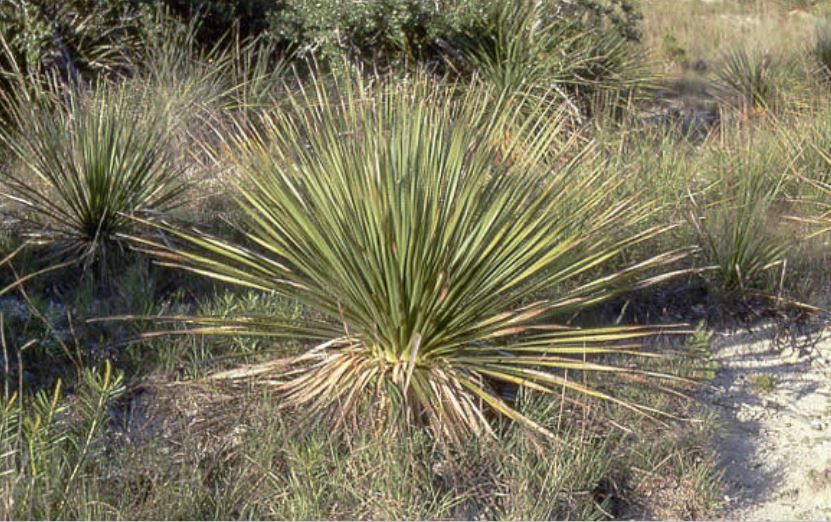
-
#RCJH GO KU
-
Today is the 82nd anniversary of D-Day – the Allied landings in Normandy. It is one of the most important moments of unity among the defenders of life in human history, and it was less than a year until the peoples’ aspiration for freedom and the hope of peace prevailed in May 1945. Remembrance post for those that gave their life.

-
Thanks for the remembrance reminder. Too bad history doesn't seem important in our schools anymore.
-
School's out. I sub a lot in History, we have great history teachers!
-
@RockChalkinTexas-0 what is that?